Fullstack DevOps Engineer / Mobile • Web • Backend • CI/CD • Infrastructure & Observability
Fullstack DevOps Engineer,
Mobile • Web • Backend • CI/CD • Infrastructure & Observability.
Fullstack DevOps Engineer with 6+ years of professional software development experience, specializing in native Android engineering and building solutions across mobile, frontend, backend, automation, containerization, CI/CD, and infrastructure observability.
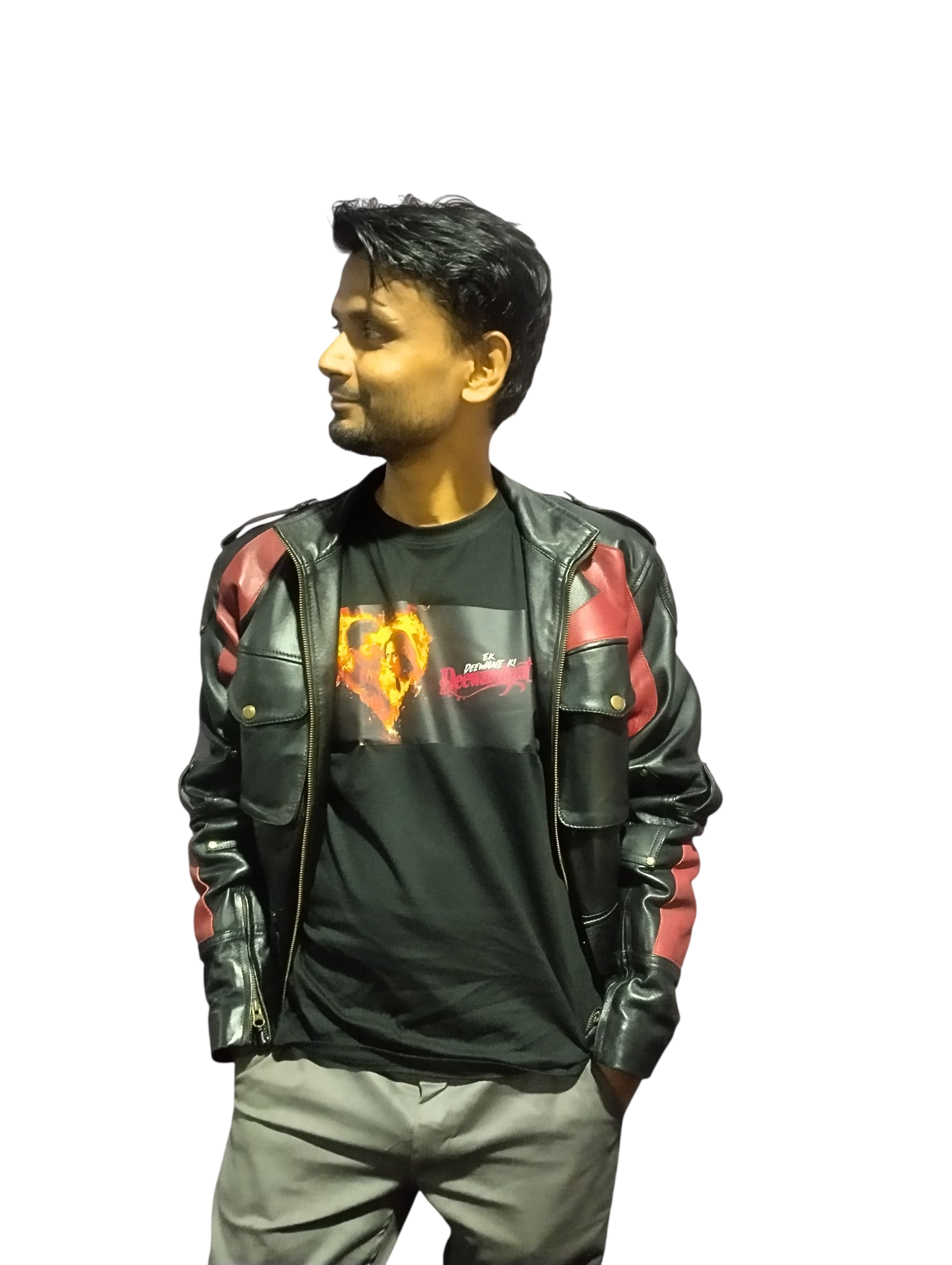
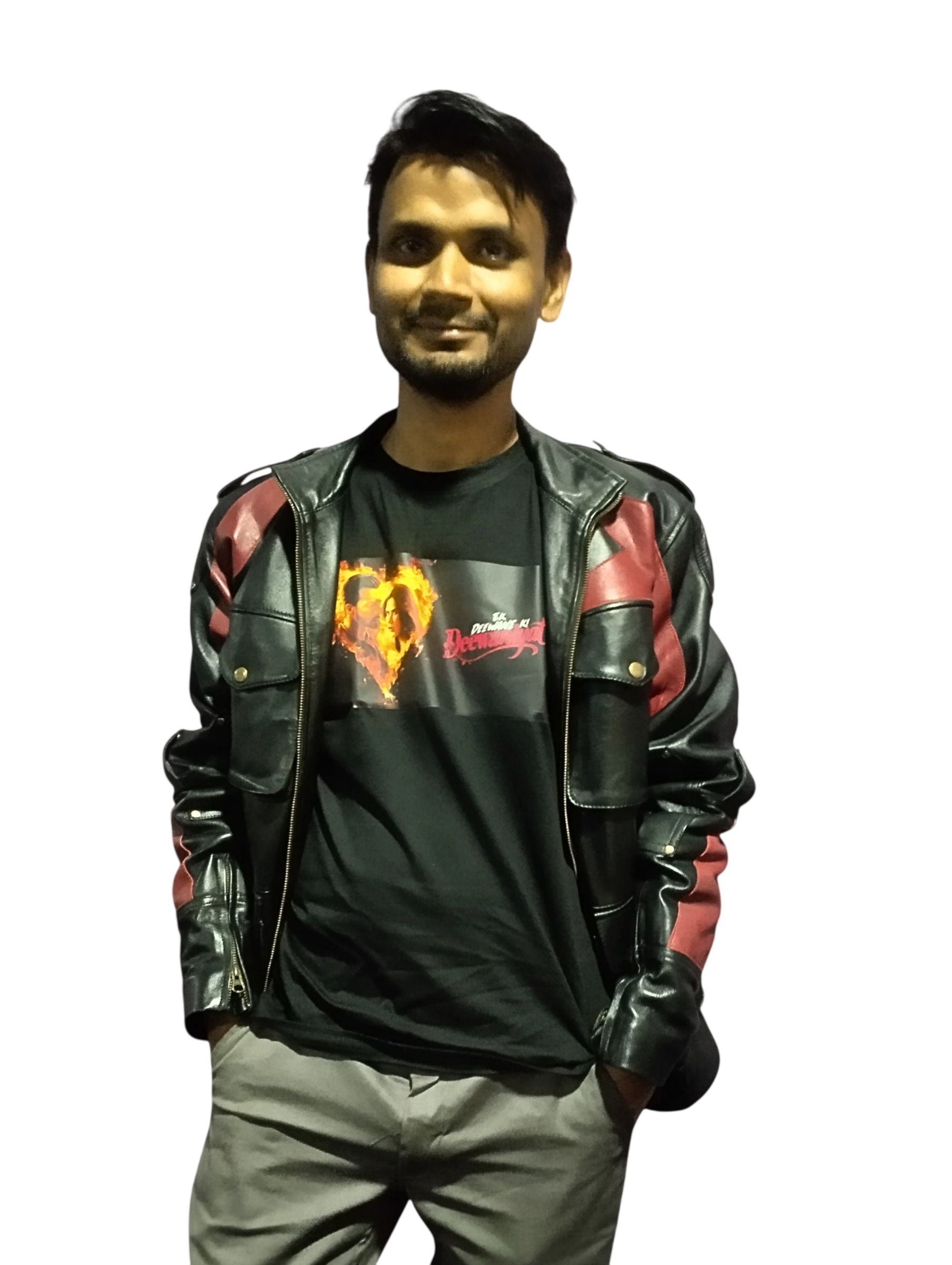
SamePerson.DifferentPerspective.
SENTINELOPS
Infrastructure Reliability & Automated Recovery Platform
Building an infrastructure reliability platform focused on service observability, incident detection, automated diagnostics, and controlled recovery workflows.
- Infrastructure and service health monitoring
- Incident detection and event-driven processing
- Centralized metrics and operational dashboards
- Automated diagnostics and controlled recovery
- Container orchestration and deployment automation
Fullstack DevOps Engineer,
architecture first.
Fullstack DevOps Engineer with 6+ years of professional software development experience, specializing in native Android engineering and building solutions across mobile, frontend, backend, automation, containerization, CI/CD, and infrastructure observability.
My core strength is production Android engineering: Kotlin, Jetpack Compose, performance work, modular architecture, and long-running codebase modernization. I expanded into React Native and web technologies while preserving product behavior and clear system boundaries.
I build AI features as real product systems: authenticated flows, backend contracts, credits, payments, Supabase Edge Functions, OpenAI/LLM integration, and professional-context experiences like Digital Me.
Download resumeCompose / React Native
REST / Supabase
Figma / Responsive UI
Cloudflare / Vercel
LLMs / Computer Vision
Assam, India
Don't just read my portfolio.
Talk to it.
Digital Me is an interactive alternative to a static resume.
Digital Me
Digital Me is an AI-powered version of my professional profile. Ask about my experience, projects, architecture decisions, Android expertise, Flutter work, computer vision, or technical background.
The interaction is backed by the portfolio UI, a Supabase Edge Function, an OpenAI/LLM layer, and curated portfolio/professional context. It helps recruiters and engineers inspect my background conversationally instead of reading every section line by line.
Try asking
Production apps,
tools, and systems.
A recruiter-first view of Android, Flutter, AI, SDK, architecture tooling, and low-latency streaming work.
Adaptive Exercise Recognition - From Rule-Based Detection to Personalized ML
Value: A Vantage Fit exercise-recognition system that evolved from squat waveform rules into a TensorFlow Lite classifier after background session recordings exposed real-world cheating behavior, validation gaps, and personalization needs.
My role: Built recognition logic on top of existing pose landmarks, used recorded sessions to investigate real-world failures, introduced Android sensor and environment validation, and shaped the adaptive learning loop.
Challenge: Users exposed edge cases by lying down, rotating the phone, exercising in poor lighting, and showing prerecorded squat videos to the camera; each exploit directly shaped the next engineering iteration.
Conceptual architecture only. No proprietary source code or unprovided performance metrics are exposed.
ArchGuard
Value: Executable architecture rules for Android teams that want feature-first validation and Clean Architecture enforcement.
Challenge: Turn architecture conventions into repeatable Gradle checks and readable HTML reports instead of relying only on code review memory.
SonicBridge — Real-Time Audio, Across Screens.
Value: A published multi-platform audio streaming solution connecting Android phones, Android TV, and a separately deployed web experience.
Challenge: Make local-network discovery, device communication, audio delivery, and reconnection feel dependable across connected devices.
Biometric SDK
Value: A reusable Android SDK that wraps biometric authentication behind a cleaner integration surface.
Challenge: Package lifecycle-aware BiometricPrompt behavior into developer-friendly APIs that can be reused across apps.
From Rule-Based Detection
to Personalized ML.
A Vantage Fit case study in production computer vision, anti-cheat design, TensorFlow Lite inference, and iterative engineering.
Detect real exercise movement with a mobile camera, then keep improving after real users found ways to break it.
The requirement was to detect exercises such as squats using the mobile camera. I used an existing pose/skeleton detection API to obtain labeled body landmarks; I did not build the pose detector itself. The engineering work was the recognition system layered on top: movement tracking, validation gates, anti-cheat checks, ML classification, rep counting, and personalization.
Recorded sessions became engineering feedback.
During real-world testing, I used background session recording to understand how users were actually interacting with the feature. Normal QA could validate expected paths, but it could not predict every creative way someone would try to game the detector.
Some of the funniest user behavior produced some of the most valuable engineering lessons. Users often believed they were defeating the camera algorithm itself. In reality, each attempt simply exposed another assumption in the system that could be measured, understood, and hardened.
Rule-Based Squat Detection
The first implementation tracked relevant joints over time and modeled the squat as a movement cycle similar to a sine waveform. If the observed cycle matched the expected squat pattern at roughly the original 90%+ confidence threshold, the system counted one squat.
Lying Down
From recorded session data, I saw users lying down and repeatedly moving their legs. Because the first detector focused heavily on movement cycles, that behavior could sometimes resemble a valid squat pattern. I added standing-posture validation and skeletal landmark orientation checks, so a valid cycle only counted when the body posture was also valid.
Phone Orientation
The next loophole was phone orientation. Users discovered that changing how the phone was positioned could interfere with assumptions made by the camera coordinate system. I solved it with Android device-orientation APIs, requiring the session to start only when the phone was in an expected valid orientation.
Instead of making the vision algorithm unnecessarily complicated, use device information the operating system already provides.Poor Lighting and Landmark Jitter
Poor lighting made pose landmarks unstable, creating motion noise and occasional false detections. I introduced a lighting quality gate so bad input was rejected before reaching the expensive recognition pipeline.
Garbage input should be rejected before reaching the expensive recognition pipeline.Reject weak signals early.
Moving Beyond Hand-Written Rules
As the feature matured, the waveform approach became harder to generalize. I replaced the sine-wave classifier with a TensorFlow Lite model trained to recognize multiple exercise patterns, initially including squats, push-ups, and jumping jacks.
The pose system still provided body movement data, but classification moved from fixed rules to learned movement recognition.
The system did not only learn what a squat looks like. Over time, it learned what your squat looks like.
Instead of treating every user as if the system was seeing them for the first time, completed exercise sessions generated valid movement data for a separate training/adaptation pipeline. The app used TensorFlow Lite for inference; training and adaptation happened separately, and updated personalized models were used for future inference.
Playing a Squat Video
Eventually, users tried playing prerecorded squat videos in front of the camera. The camera could still see a person, correct body landmarks, and valid squat motion. Since standard Android devices do not provide reliable universal depth sensing that simply solves this, I avoided expensive screen detection or monocular depth estimation and introduced a device-sensor / physical-context handshake using Android APIs.
When one sensor can be fooled, validate it with an independent signal.Camera + Device State
The vision result was no longer trusted by itself. The system required agreement between the camera / pose signal and an independent device physical-state / sensor signal before recognition was accepted. This acted as a lightweight liveness check without exposing sensitive anti-cheat implementation details.
Computer vision surrounded by context.
What This Project Taught Me
Production engineering is iterative. A feature can become a learning system instead of remaining static.
Open Full Technical Breakdown
Problem
Detect camera-based exercise movement without claiming ownership of pose estimation itself. The algorithm consumed labeled skeletal landmarks and reasoned about exercise motion, validity, and rep count.
Initial Approach
Joint trajectories were tracked over time and compared against the expected squat cycle. The waveform confidence threshold gave the first working version a simple, inspectable decision rule.
Real-World Failures
Background session recordings revealed lying down, phone rotation, poor lighting, jittery landmarks, and prerecorded video attempts. Each one exposed a wrong assumption about the input stream that normal development testing had not produced.
Iterations
Each failure added the smallest useful validation layer: standing posture, skeletal landmark orientation checks, phone orientation, lighting quality, Android sensor/physical-context validation, and eventually learned movement classification.
Final Architecture
Recognition became a validation-gated system: camera input, environmental gates, existing pose landmarks, posture validation, TFLite inference, sensor-based liveness checks, rep counting, and a separate personalization/training pipeline.
Tech Stack
Engineering details
worth inspecting.
Concise project notes with role, challenge, technologies, and links.
Adaptive Exercise Recognition
A high-impact production case study showing how background session recordings turned user cheating attempts into engineering feedback, evolving a camera-based detector from rule-based squat waveform detection into validation-gated TensorFlow Lite inference and user-specific model adaptation.
Engineering notes: Pose landmark consumption, joint trajectory tracking, recorded-session analysis, standing validation, skeletal orientation checks, lighting gates, Android orientation APIs, sensor-based liveness, anti-cheat design, multi-exercise classification, and personalization.
Tapori AI - Android, React Native & Flutter AI Chat Application
An AI-powered conversational mobile application with contextual chat, authentication, credit management, payments, Supabase Edge Functions, and LLM integration. Originally built natively for Android, with React Native and Flutter branches explored while preserving Clean Architecture and backend contracts.
Architecture story: Flutter UI -> Riverpod -> Use Cases -> Repository -> Remote Data Source -> Dio -> Supabase Edge Functions -> OpenAI.
Engineering notes: Clean Architecture migration, backend contract preservation, Riverpod state management, Dio networking, GoRouter navigation, Android + Web compatibility, authentication, credits and HTTP 402 handling, and payment flow.
The repository includes Android, React Native, and Flutter context; the Flutter implementation is on the master-flutter branch.
ArchGuard
ArchGuard addresses architecture drift in growing Android projects by validating feature-first structure, Clean Architecture boundaries, and executable architecture rules.
It is Kotlin and Gradle developer tooling designed to make project constraints visible through repeatable checks and HTML reports.
SonicBridge — Real-Time Audio, Across Screens.
SonicBridge is a multi-platform audio streaming solution connecting Android phones, Android TV, and web experiences through local-network discovery, device communication, and low-latency audio delivery.
Biometric SDK
Biometric SDK is a reusable Android authentication SDK for projects that need lifecycle-aware BiometricPrompt integration behind a cleaner developer API.
The work reflects reusable SDK design, Android lifecycle awareness, and packaging implementation details into simple integration contracts.
Sally Launcher
Sally Launcher is a custom Android launcher focused on a clean, smooth user experience and fast access to core phone actions.
It represents practical Android SDK work, Kotlin implementation, and product thinking around everyday mobile ergonomics.
From Native Android
to Flutter.
Hands-on Flutter built on years of production Android architecture experience.
Architecture transfers across platforms
After years of production Android engineering, I expanded into Flutter by migrating Tapori AI to a cross-platform client while preserving the same Clean Architecture principles, backend contracts, and product behavior.
This is hands-on Flutter experience grounded in senior mobile engineering, not a claim of 6+ years of Flutter-only work.
Mobile Engineering
Meets AI.
AI features treated as product systems, not one-off demos.
AI integrated into real mobile flows
I treat AI as another product capability - something that should be architected, secured, monitored, and integrated into real user flows rather than added as a demo feature.
Typical AI path
Senior mobile work,
measured by ownership.
Vantage Circle
Guwahati, India
- Owned Android engineering across enterprise products including Vantage Circle and Vantage Fit.
- Migrated more than 60% of a legacy MVP codebase to modern MVVM architecture.
- Converted 25+ XML screens to Jetpack Compose and supported Material 3 adoption.
- Helped shape feature-based modular architecture, reusable components, and maintainable Android architecture boundaries.
- Worked on Android performance optimization, profiling, and modernization of older app layers.
- Implemented motion and fitness-related engineering work involving Kalman filtering and ML Kit Pose Detection.
- Migrated persistence from SQLite patterns toward Room where appropriate.
- Supported Android 15 migration/readiness and platform compatibility work.
- Mentored engineers, reviewed architecture decisions, and took technical ownership across product delivery.
GeekWorkX Technologies
Guwahati, India
- Delivered multiple Android applications for clients using Java and Kotlin.
- Built cross-platform applications using React Native.
- Developed REST APIs and backend services using PHP and MySQL.
- Worked across the full software development lifecycle, from requirements gathering to deployment and support.
KBG Software
Guwahati, India
- Developed Android applications for educational institutions.
- Implemented attendance management, notifications, student records, and communication features.
- Collaborated directly with clients to gather requirements and deliver production-ready solutions.
Grouped by
engineering use.
A practical stack across mobile, architecture, backend integration, AI, and tooling.
Mobile
Architecture
State & Async
Networking & Backend
AI
Tooling
Engineering articles
& open source.
Frequently asked
questions.
Short answers for recruiters and engineers scanning the portfolio.
Who is Nizamuddin Ali Ahmed?
Nizamuddin Ali Ahmed is a Fullstack DevOps Engineer based in Guwahati, Assam, India, with 6+ years of mobile and Android engineering experience and hands-on Flutter work.
What does Nizamuddin specialize in?
He specializes in Android, Kotlin, Jetpack Compose, Flutter, Dart, Clean Architecture, Android architecture, Mobile AI, LLM integration, Supabase, SDKs, Gradle plugins, and developer tooling.
What is Digital Me?
Digital Me is an AI-powered interactive version of his professional profile. Visitors can ask about experience, projects, Android expertise, Flutter work, architecture decisions, and career background.
What has he built with Flutter?
He migrated Tapori AI to a Flutter client using Dart, Riverpod, Dio, GoRouter, and Clean Architecture while preserving backend contracts and product behavior.
What is Tapori AI?
Tapori AI is an Android and Flutter AI chat application with contextual chat, authentication, credit management, payments, Supabase Edge Functions, OpenAI integration, and LLM-backed flows.
What is ArchGuard?
ArchGuard is an open-source Gradle plugin for executable architecture rules, feature-first validation, Clean Architecture enforcement, and HTML reports.
What is SonicBridge?
SonicBridge is a TV-to-mobile low-latency audio streaming system using Android TV, AudioPlaybackCapture, WebSockets, PCM audio, AudioTrack, and local network streaming.
How did users cheat the squat detector?
Recorded testing sessions showed users lying down, changing phone orientation, and later trying prerecorded squat videos. Each attempt exposed an assumption, which led to posture validation, Android orientation checks, lighting gates, and sensor-based liveness validation.
Is he only an Android developer?
No. Android is his deepest production background, but the current portfolio positions him as a Fullstack DevOps Engineer working across Android, Flutter, architecture, AI integrations, and developer tooling.
Need software
engineering depth?
I'm open to software engineering conversations across Android, React Native, web, cloud, AI integrations, developer tooling, and production product work.
A different starting point,
the same curiosity.
Bachelor of Engineering
(Mechanical Engineering)
Royal School of Engineering & Technology, Guwahati, Assam
Higher Secondary (Science)
Sankardev Academy, Nalbari, Assam · Completed with 78%.
Secondary School (Matriculation)
Dreamland English School, Mukalmua, Assam · Completed with 81%.
Final year projects included Stress Analysis of a Bicycle Frame and Design of a Klann Walking Mechanism (Hexapod Robot).
Good work is
shared work.
“Thoughtful engineering is the habit of making the next change easier than the last.”
— A principle I bring to every team
“The best mobile experiences disappear into the moment they make possible.”
— Product-minded Android engineering
Designed for
every surface.
Android experiences should feel native wherever they land.
Tap a device profile to inspect the responsive surface.
Systems that
stay legible.
Technology changes.
Engineering thinking remains.
I believe engineering exists to solve real-world problems. Sometimes that solution is software. Sometimes it is hardware, artificial intelligence, or system design.
Make the next change easier.
Private TV Audio.
Reimagined.
An Android-powered low-latency audio streaming system that turns a TV into a personal wireless listening experience—over local Wi-Fi, without cloud services or expensive hardware.
Late-night TV should not be a negotiation.
Bluetooth introduces latency. Wired headphones reduce comfort. Premium wireless systems are expensive. SonicBridge asks whether software can solve the real problem with devices people already own.
More bandwidth, more control, and no internet dependency—enough room to move stereo PCM audio with a low-latency buffer.
From capture to comfort.
An engineering case study, not an app description.
Questions before products.
WITH CARE
Ideas waiting for a first prototype.
Tools that make teams faster.
Write down the hard-won parts.
Architecture is a communication problem.
Technical writing is where implementation details become shared context. Explore notes on Compose, performance, clean architecture, and building systems that teams can understand.
Open knowledge baseCuriosity is a technical skill.
Too much abstraction
When a system hides every decision, it also hides the path to a better decision.
Lesson / Make boundaries visible.Ambient interfaces
Exploring interfaces that communicate status through light, motion, and restraint.
Lesson / Feedback can be quiet.Physical + digital
Software thinking can shape a physical experience.
Lesson / Systems have edges.One problem leads to another.
The work keeps opening up.
I didn't just meet an Android developer.
I met an engineer who solves problems.
From Recipes
to Repetitions.
Two everyday problems, connected by the same instinct: build what you wish existed.
FindMyRecipe solved one everyday problem: what should I cook today?
Then came a full stomach, a comfortable bed, and absolutely no motivation to exercise. After seeing “Unlock Premium” and “Subscribe to Continue” everywhere, the same thought returned: I'm an Android developer. Why not build one myself?
FindMyRecipe
AI-powered ingredient recognition and recipe discovery, built around a question from my mom.
Explore the projectFormFit
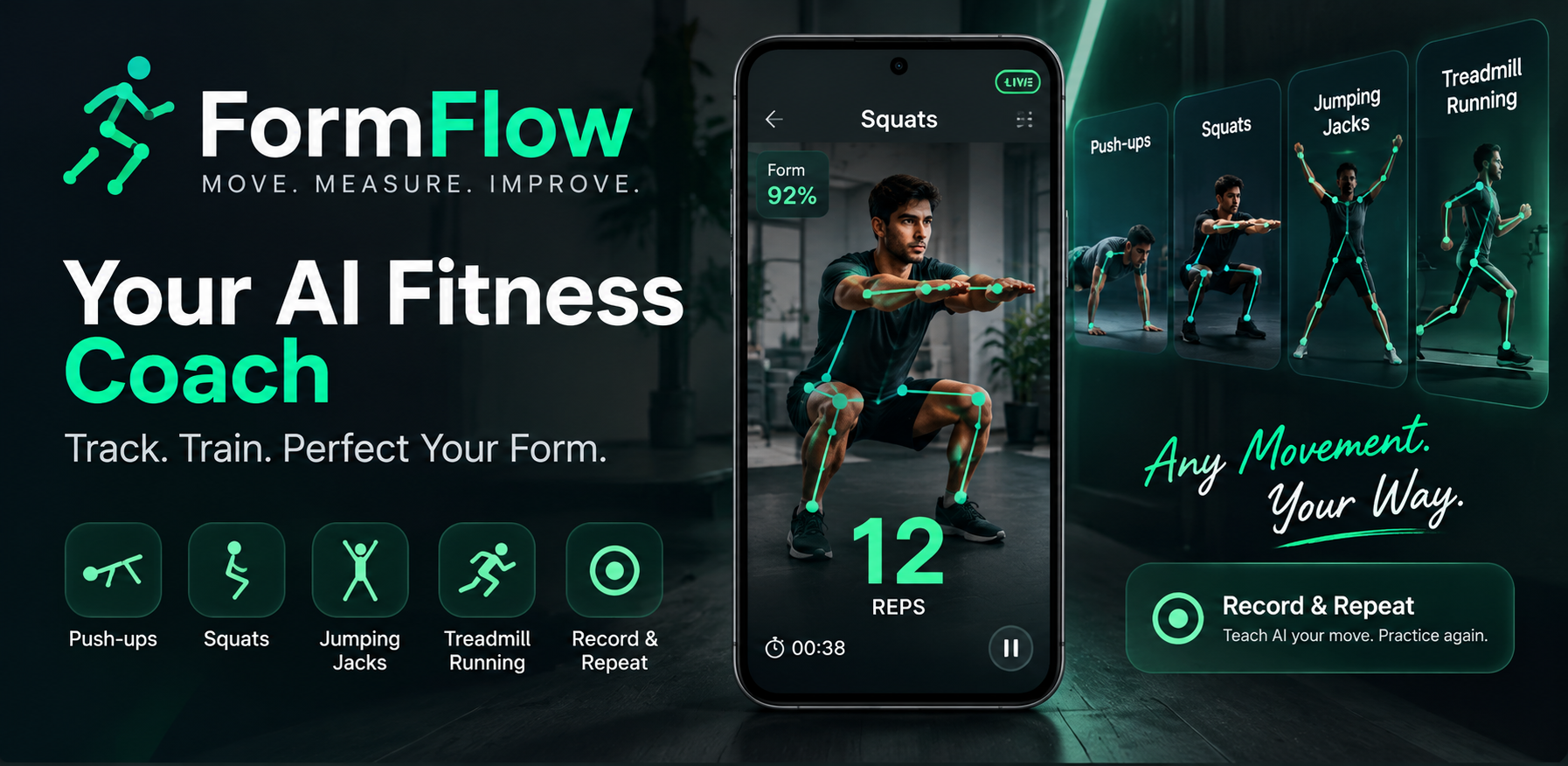
Movement tracking, pose analysis, repetition logic, and a vision for Record & Repeat.
Read the case studyAndroid / Computer Vision / Fitness Technology
Move. Measure.
Improve.
FormFit is an AI-powered fitness and human-movement tracking app built to make exercise feedback useful without putting the essential experience behind a subscription.
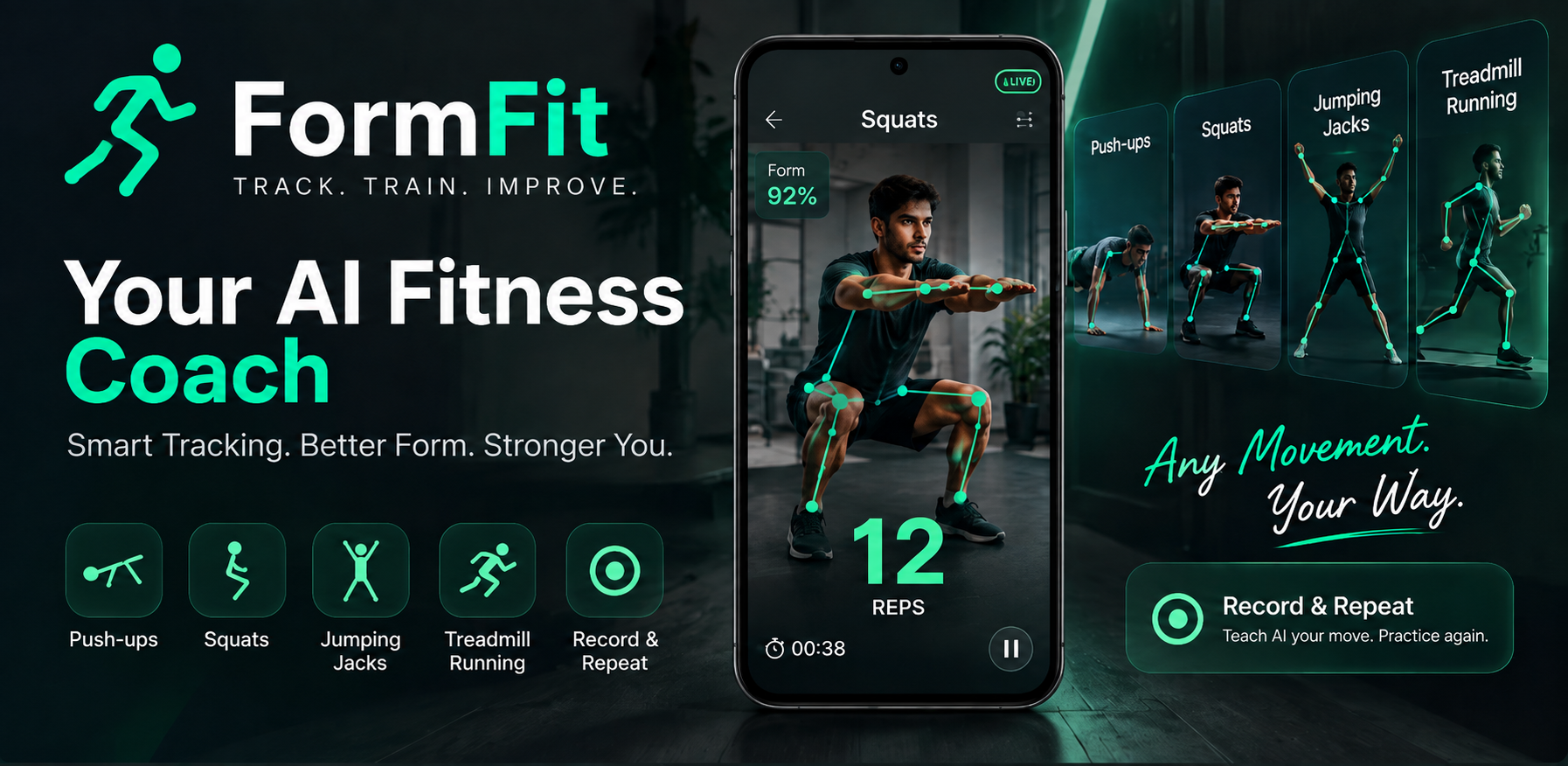
First I built an app to decide what to eat. Then I needed one to burn it off.
I wanted workout tracking without essential features hidden behind premium subscriptions. I also love dancing—not professionally, but as a bedroom dancer copying videos on the television. Remembering every movement and getting the timing right is hard.
That led to a bigger idea: Record. Repeat. Improve. Record & Repeat is presented as an evolving product direction, not as a claim that every movement is already shipped.
Movement feedback
in context.
Screenshots show the product surface; labels distinguish available flows from the broader direction.
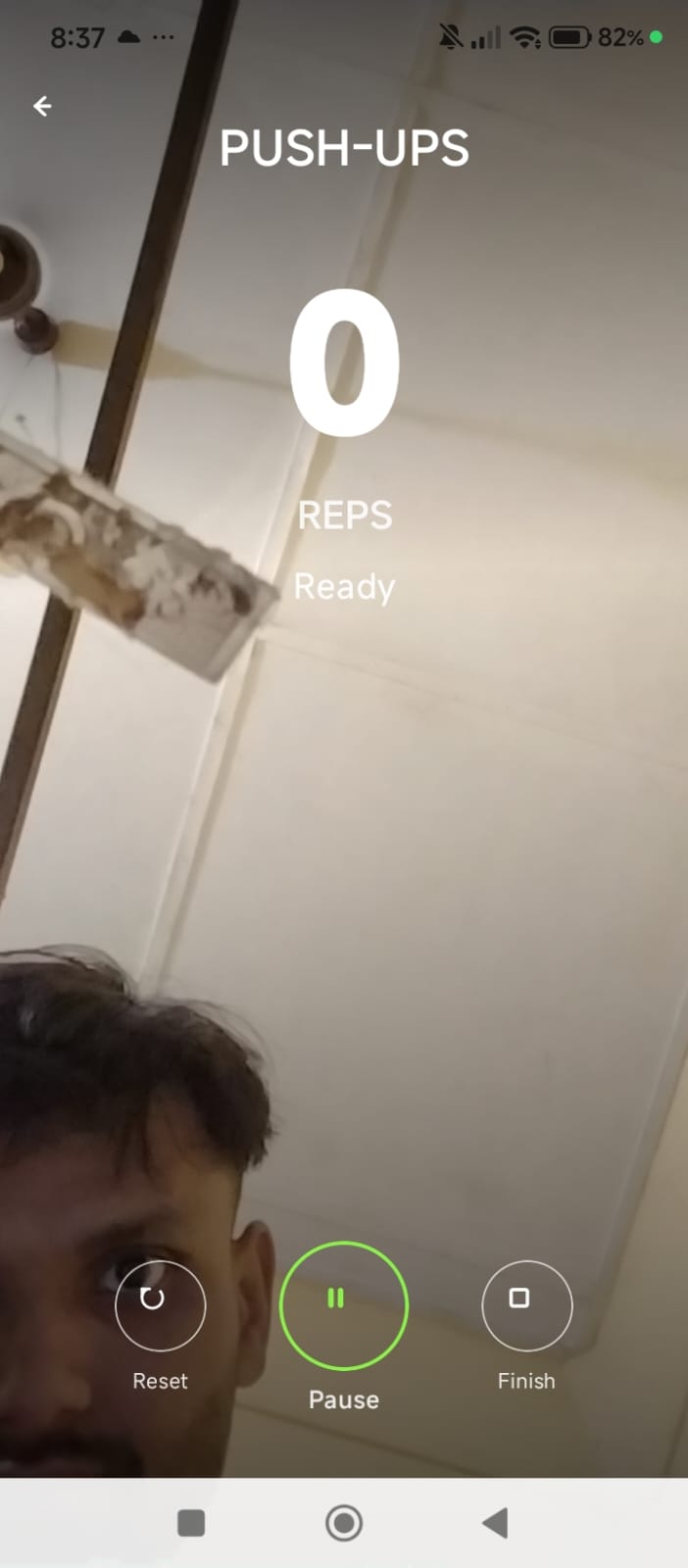
Push-up tracking
Pose-based movement tracking with live repetition state and session controls.
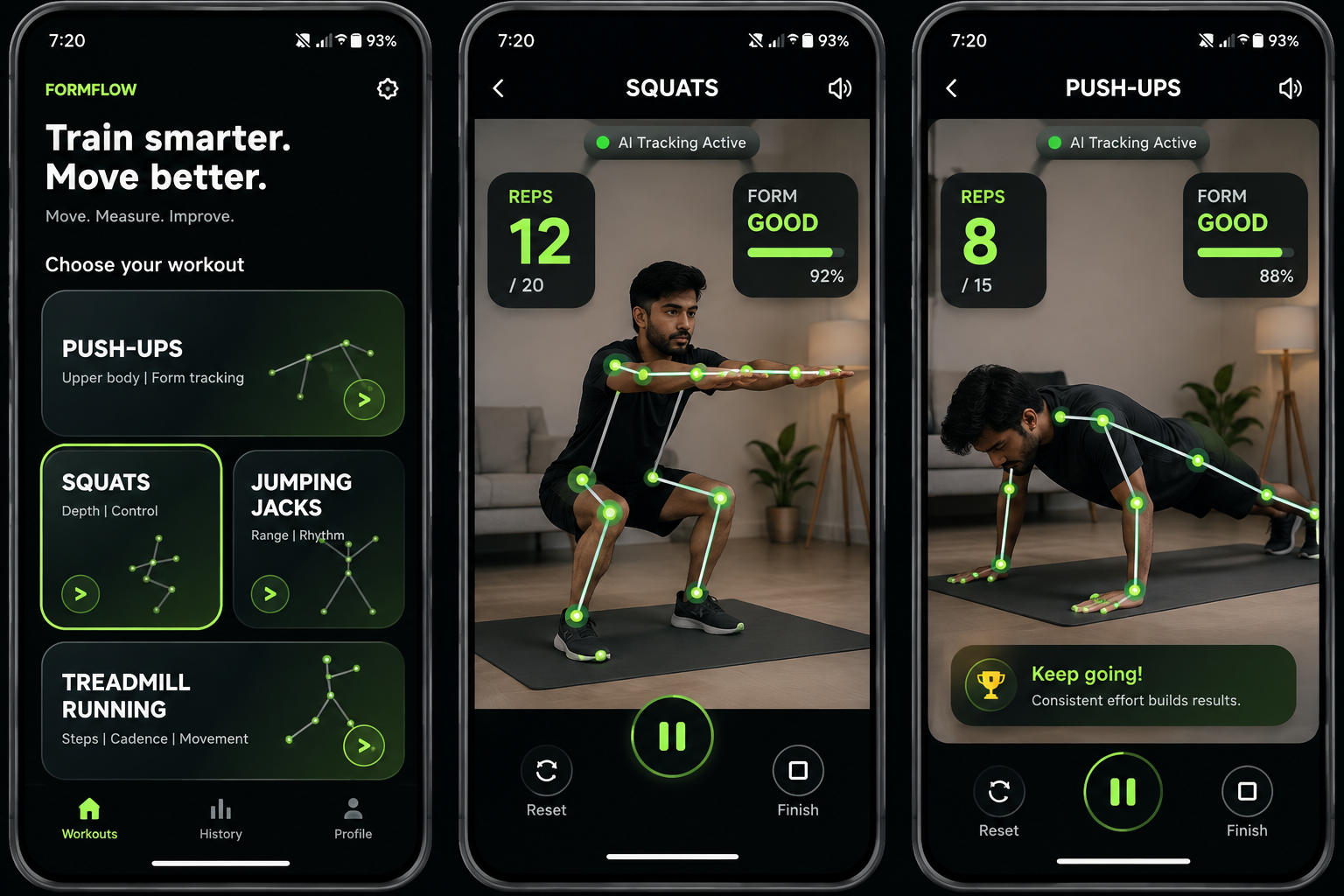
Squat tracking
Body landmarks support movement analysis, repetition counting, and visible form feedback.
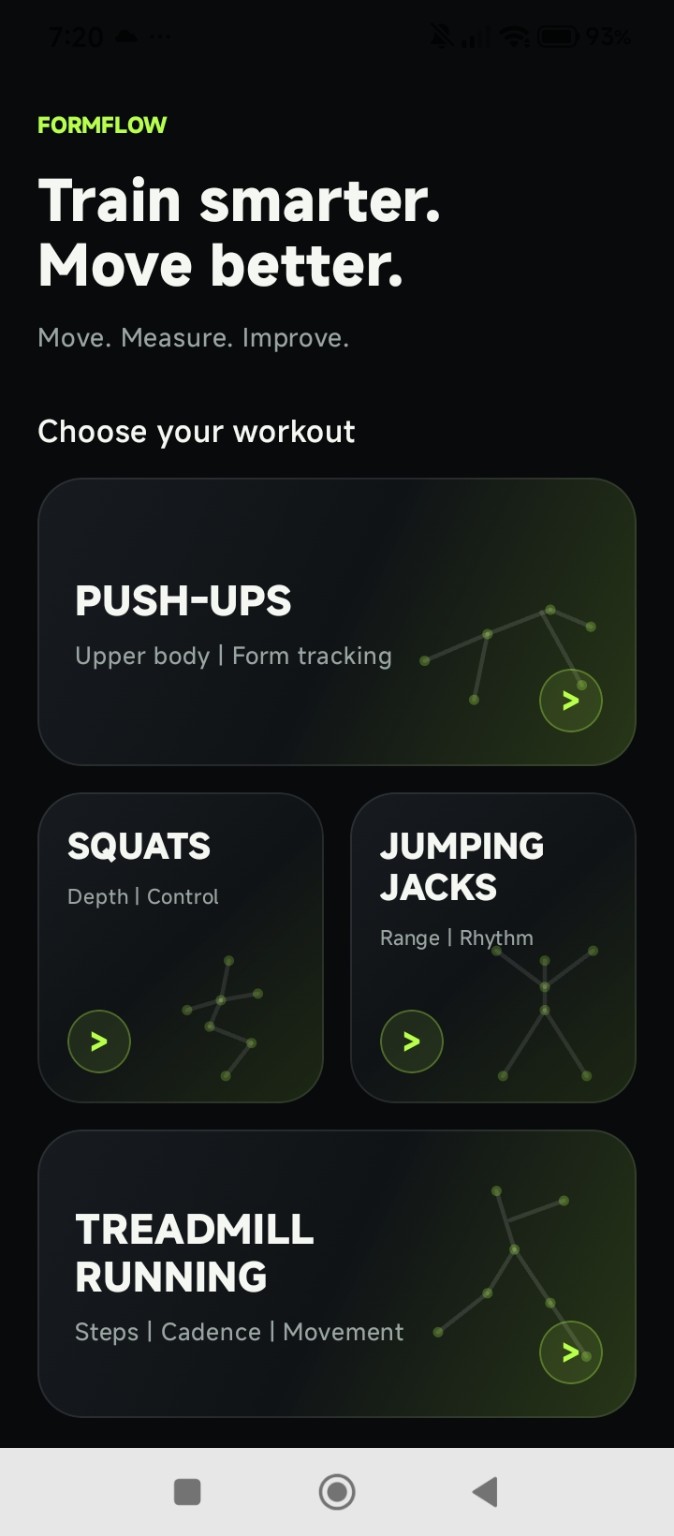
Jumping jacks and treadmill running
The selector presents movement-specific tracking surfaces and available metrics without overstating internal implementation.
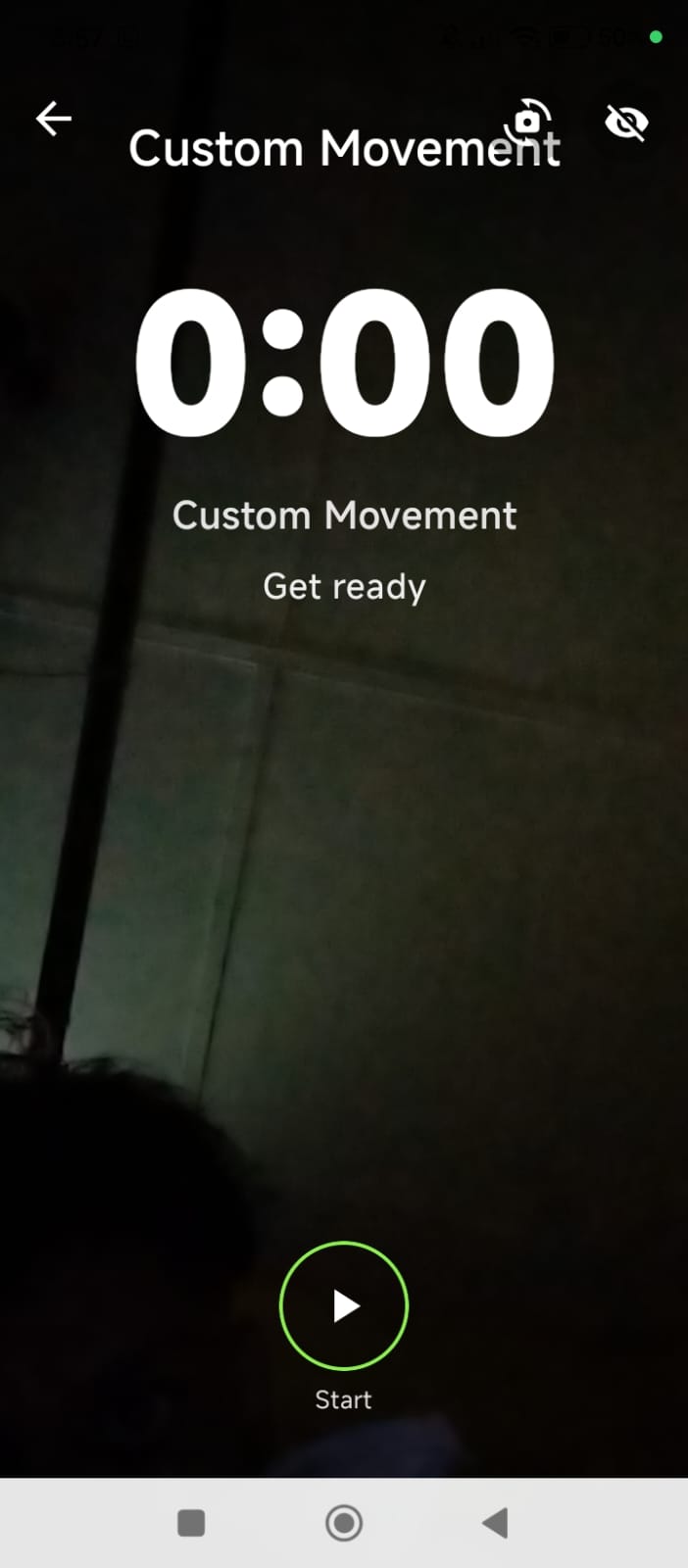
Record & Repeat
Capture a reference movement and practice it again through pose analysis—the idea connecting fitness tracking with dancing.
Android UI, vision, and movement logic.
Kotlin · Jetpack Compose · Android SDK · MVVM · Clean Architecture
CameraX · frame analysis · ML Kit Pose Detection · body landmarks
TensorFlow Lite · on-device inference surface · confidence-aware analysis
Movement detection · landmark processing · repetition counting · feedback state
From camera frames
to useful feedback.
A lightweight pipeline: capture, detect, analyze, count, and surface state in Compose.
Problem → Investigation → Solution → Learning
Problem: camera analysis must not block the UI. Investigation: frame acquisition and pose work need a lifecycle-aware analysis path. Solution: keep processing separate from Compose state and surface meaningful results. Learning: responsive feedback depends on disciplined boundaries.
Problem: landmarks vary with framing, lighting, and confidence. Investigation: movement logic needs more than one raw coordinate. Solution: process landmarks into movement signals and treat confidence as input. Learning: reject weak signals before counting.
Problem: an older WorkManager multiprocess dependency appeared in the release runtime classpath investigation. Investigation: dependency resolution and runtime packaging must be checked together. Solution: this portfolio records the investigation without claiming a verified root-cause fix that is not visible in the supplied frontend/repository context. Learning: release artifacts are part of feature ownership.
See the product
in motion.
Original artwork and application captures, shown without stretching or cropping important UI.
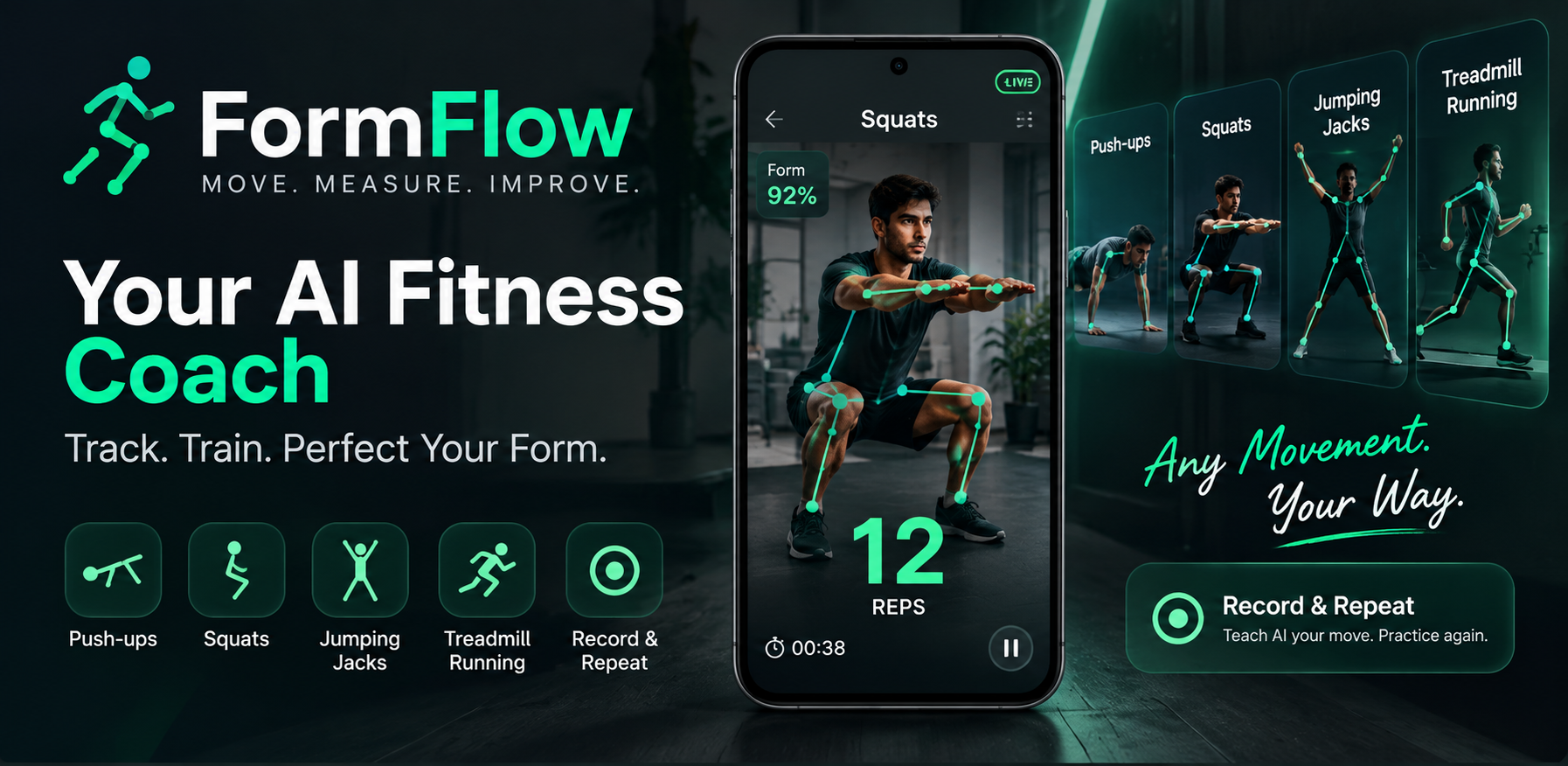

Two everyday problems. Two Android applications. One simple philosophy: Build what you wish existed.
FindMyRecipe started with a question from my mom. FormFit started with fitness subscriptions and my love for dancing.
First, I built an app to help me decide what to eat. Then I built one to help me burn it off!